ἀπελεύθερος
Greek word · FaithLabz word study
ἀπελεύθερος
apeleutheros
freedman, one set free
Often translated: freedmanfreed personone who has been set freeliberated slavemanumitted servant
What apeleutheros means
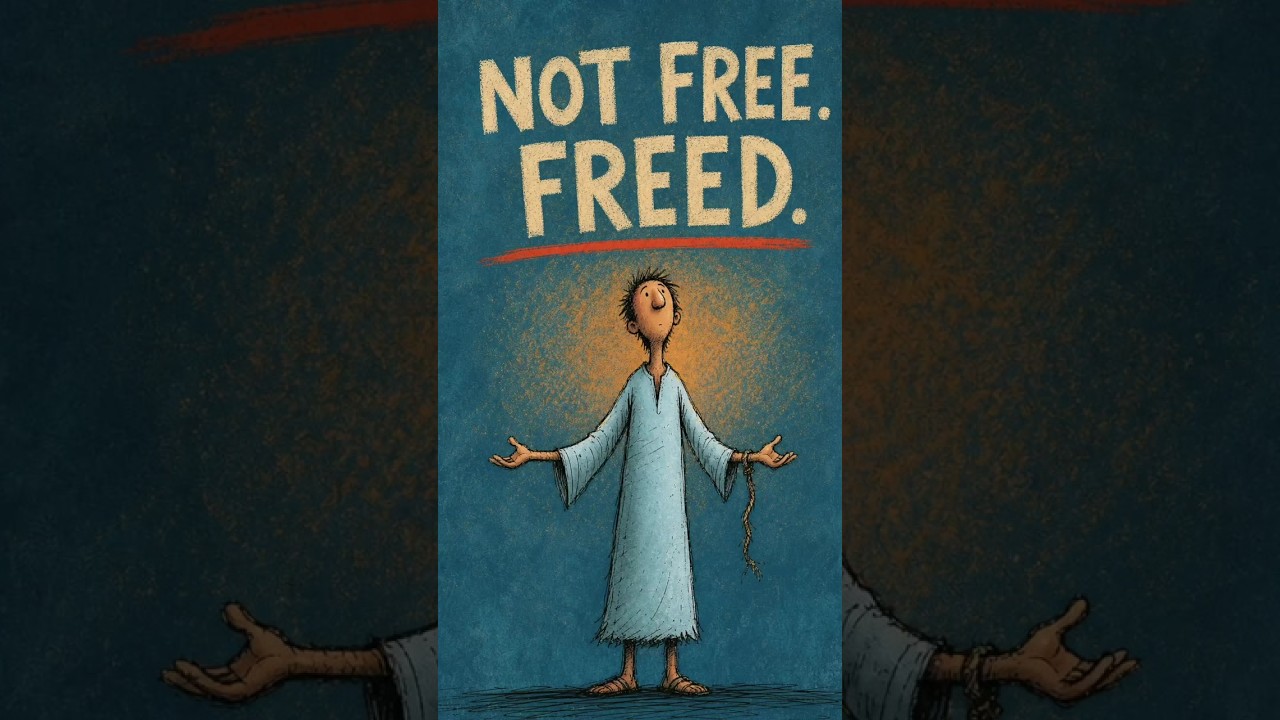
The word ἀπελεύθερος names a specific social category in the ancient Roman world: a slave who has been formally manumitted, set free by a master's deliberate legal act. This is not simply 'a free person.' The word carries the prefix ἀπό, meaning 'away from' or 'out of,' attached to ἐλεύθερος, meaning 'free.' So the word is literally 'one who has been freed away from' a former condition. The freedman occupied a peculiar social space. He was no longer a slave, but he was not a freeborn citizen either. He carried his history. Roman culture knew this person as someone whose freedom was granted, not inherited, and that distinction shaped every social interaction he had. He owed loyalty to his former master, now called his patron, and that relationship didn't simply vanish at the moment of release. Paul reaches for this precise word in 1 Corinthians 7:22 because its weight is exact: the person Christ has freed is not self-liberated. The freedom came from outside, from another's authority and will. The freed person doesn't erase the relationship with the one who freed them; they inhabit it differently. There is also a mirror image in that same verse: the freeborn person who comes to Christ becomes Christ's slave. Paul stacks both realities together because the Roman audience would feel the social voltage in each direction. The ἀπελεύθερος metaphor tells you that your freedom has a story, a source, and a continuing relationship with the one who made it possible.
Why this word matters
Most of us read 'freed' in 1 Corinthians 7:22 and picture someone simply walking out an open door, owing nothing to anyone. I read it that way for years. But ἀπελεύθερος doesn't describe a person with no past and no ties. It describes a person whose freedom is inseparable from the one who granted it. The freed slave in Rome still bore the name of the patron who freed him. He still appeared in the patron's household for certain occasions. His freedom was real, but it was relational. When Paul says you are the Lord's ἀπελεύθερος, he is saying your liberation is not self-made, not abstract, and not disconnected from the one who purchased it. Your freedom has a face. That should change the way you carry it.
Etymology
Built from the prefix ἀπό (away from, out of) combined with ἐλεύθερος (free, freeborn). The root ἐλεύθερος likely connects to the Proto-Indo-European root meaning 'people' or 'belonging to the people,' suggesting that freedom originally meant belonging to a community rather than being subject to another's household. Related forms include ἐλευθερία (eleutheria, freedom as an abstract state) and ἐλευθερόω (eleutheroo, the verb 'to set free,' used in John 8:36 and Galatians 5:1).
Key Verses
Where apeleutheros appears in Scripture, and why each verse showcases it.
1 Corinthians 7:22ESV
For he who was called in the Lord as a bondservant is a freedman of the Lord. Likewise he who was called as a free man is a bondservant of Christ.
This is the only New Testament occurrence of ἀπελεύθερος, and Paul places it in deliberate tension with 'bondservant of Christ.' The social reversal forces both categories to redefine themselves in relation to the same Lord.
John 8:36ESV
So if the Son sets you free, you will be free indeed.
The verb ἐλευθερόω (the same root) appears here, and Jesus names himself as the active agent of the freeing. Freedom is not seized; it is conferred by someone with the authority to grant it.
Galatians 5:1ESV
For freedom Christ has set us free; stand firm therefore, and do not submit again to a yoke of slavery.
Paul uses ἐλευθερία here, the abstract noun from the same family, but the logic is identical: freedom originates in Christ's act and demands a particular posture in response.
Romans 6:18ESV
And, having been set free from sin, have become slaves of righteousness.
The same structure as 1 Corinthians 7:22 appears here. Freedom from one master is simultaneously entrance into another loyalty. Paul refuses to let freedom float as pure autonomy.
1 Peter 2:16ESV
Live as people who are free, not using your freedom as a cover-up for evil, but living as servants of God.
Peter assumes that genuine freedom has a shape and a direction. Freedom without accountability to the one who granted it was, in Roman culture, a contradiction in terms, and Peter trades on that assumption.
Related Words
Words in the same semantic family.
1 Teaching on apeleutheros
Every video where Adam teaches on this word, in publication order.
Featured In
This word is studied in depth in the following monthly Bible studies.