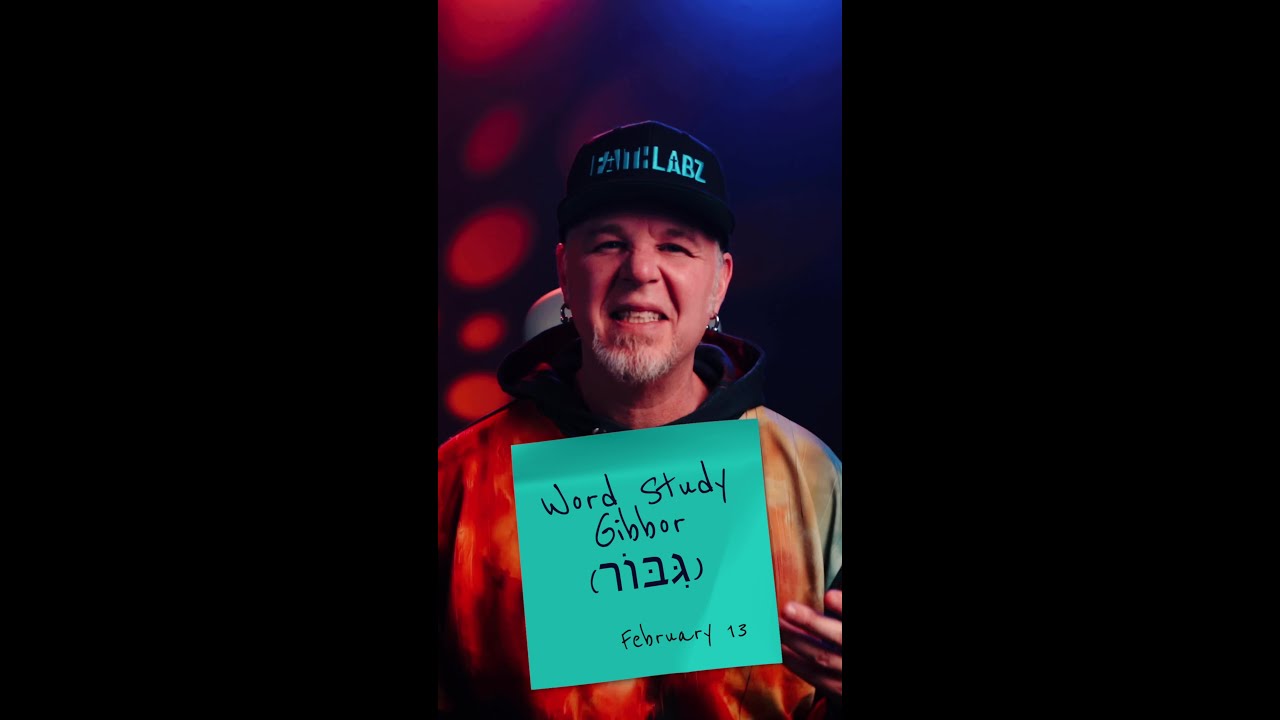
What gibbor means
Gibbor carries the weight of a man whose strength has been tested and proven. The root idea is not potential power but demonstrated might. In its most basic sense, gibbor means a strong man, a warrior, a champion. But the word never stays abstract. It always has flesh on it.
When David's mighty men are called gibborim in 2 Samuel 23, the text immediately lists their acts. These are not men with impressive credentials; they are men who stood in a field of lentils and fought the Philistines alone, men who broke through enemy lines to bring David a cup of water. Gibbor is a word you have to earn.
The word applies to warriors, hunters, kings, and angels. Nimrod is called a gibbor in Genesis 10:9, a mighty hunter before the Lord. Boaz is called a gibbor hayil in Ruth 2:1, a man of great standing and substance, which shows the word can describe social and moral force, not just physical strength.
The most theologically dense use comes in Isaiah 9:6, where the promised son is called El Gibbor, Mighty God. Here the word scales upward from warrior to divine. The same term used for a soldier standing his ground in battle gets applied to the eternal Son. That is not an accident. The biblical authors wanted you to feel the weight of divine strength in terms you already understood from the battlefield.
Why this word matters
Most of us read the word mighty and our eyes keep moving. I did for years. Mighty felt decorative to me, like a polite compliment the text was paying to someone important. I missed that gibbor is not a title; it is a testimony. It says something happened. Someone fought and did not fall. When Isaiah 9:6 calls the coming Messiah El Gibbor, that name is not poetry for its own sake. It is a promise to people who had watched their armies fail, their kings be carried off, their walls come down. To those people, a Mighty God was not a theological category. It was the only hope left standing.
Etymology
Gibbor derives from the root gavar, meaning to be strong, to prevail, to overcome. This root also produces gevurah (strength, might, valor) and gever (a man, specifically a strong man). The semantic family clusters around proven strength and masculine prevailing. Gavar appears in Genesis 7:24 when the floodwaters prevailed over the earth. The same force that describes floodwaters overwhelming creation describes the warrior who cannot be stopped.