הַלְלוּיָהּ
Hebrew word · FaithLabz word study
הַלְלוּיָהּ
hallelujah
praise the Lord
Often translated: Praise the LORDPraise YahHallelujahPraise ye the LORD
What hallelujah means
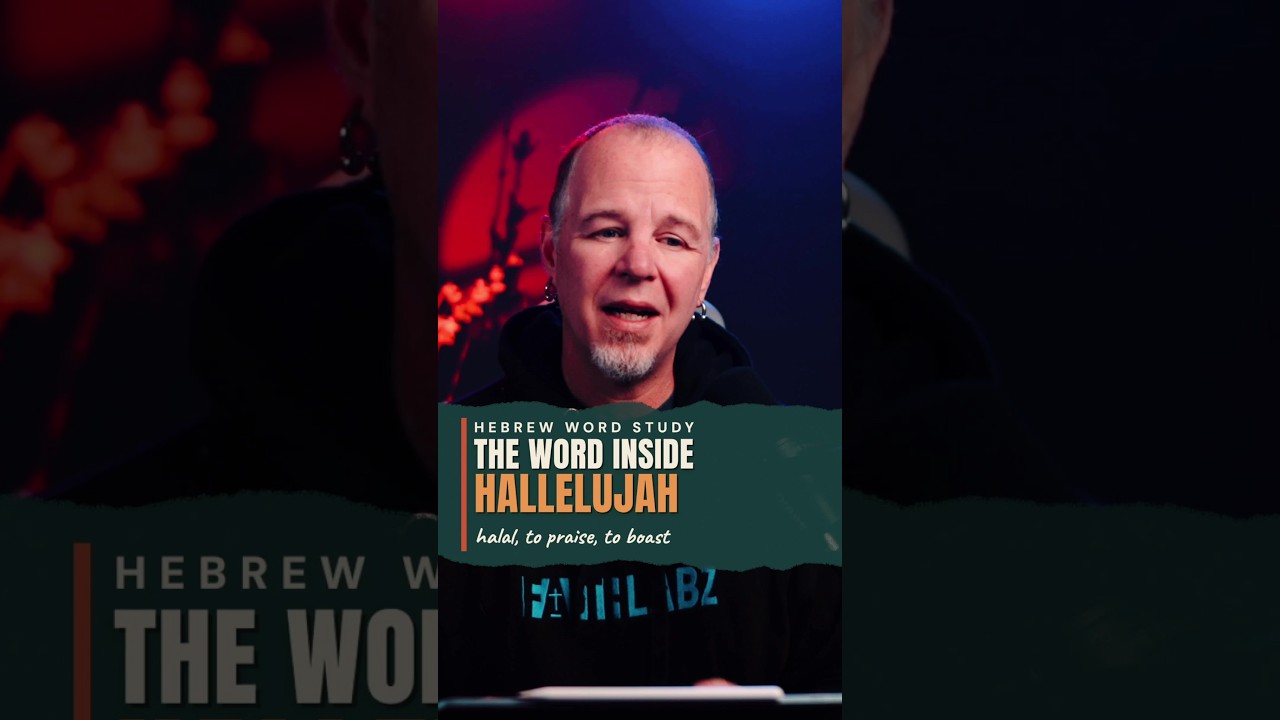
Hallelujah is not a word about praise in the abstract. It is a command aimed at a crowd. The word fuses two Hebrew elements: the imperative plural of hallel, meaning 'praise,' and Yah, the shortened form of the divine name YHWH. Taken together, it means 'You all, praise Yah.' The plural imperative matters enormously. This is not one person quietly admiring God. This is a leader turning to a congregation and saying, 'Everyone in this room, open your mouth right now.' The word appears twenty-four times in the Hebrew Bible, almost entirely in the Psalms, and clusters especially in the final five psalms (146 through 150), where it functions as both the opening cry and the closing seal of each poem. The Levitical worship leaders used this word to cue the gathered assembly into corporate response. It was liturgical ignition. By the time of the New Testament, hallelujah had already crossed into Greek-speaking Jewish worship unchanged, appearing in Revelation 19 as the shout of a heavenly multitude responding to God's just judgment. The word survived every translation effort because no equivalent exists. 'Praise the Lord' is accurate but tame. It describes what hallelujah does without carrying what hallelujah feels. The Hebrew carries urgency, embodiment, and community. You cannot shout hallelujah alone and mean it the way the Psalms intend it. It assumes other voices around you. It assumes a room, a body, a people gathered before a God who is worth every breath in every lung.
Why this word matters
Most of us treat hallelujah as filler. We sing it in hymns and Christmas concerts and barely register what we're saying. I did that for years. I thought it was just an intensifier, the religious version of 'wow.' But the plural imperative stopped me cold when I finally sat with the Hebrew. This word presumes you are standing next to someone. It presumes a community exists that can be called to praise together. In an age when so many people have quietly drifted from gathered worship and replaced it with private spirituality, hallelujah stands as a word that cannot be fully spoken in isolation. It is an invitation that is simultaneously a summons. When you say it, you are either calling others in or confessing that you belong to a people who answer together.
Etymology
Hallelujah derives from the root hallel, a Piel verb form of halal, meaning to shine, to boast, to make a loud show of praise. The Piel stem intensifies the action, so this is not mild commendation but exuberant, even raucous, declaration. Yah is the contracted form of YHWH, the personal covenant name of Israel's God. Related words include tehillah (song of praise), hallel (the liturgical Passover psalms sung at feasts), and mahalal (boasting or glory).
Key Verses
Where hallelujah appears in Scripture, and why each verse showcases it.
Psalm 146:1ESV
Praise the LORD! Praise the LORD, O my soul!
The psalm opens with hallelujah as a corporate call and then immediately turns inward, showing that the communal command and the personal response are meant to work together, not in competition.
Psalm 150:6ESV
Let everything that has breath praise the LORD! Praise the LORD!
The entire Psalter closes with hallelujah, expanding the command beyond Israel to every breathing creature, making this the widest possible frame for the word's intent.
Psalm 113:1ESV
Praise the LORD! Praise, O servants of the LORD, praise the name of the LORD!
This opens the Egyptian Hallel psalms sung at Passover, connecting hallelujah directly to Israel's deliverance and covenant identity, not merely to emotional feeling.
Revelation 19:3ESV
Once more they cried out, 'Hallelujah! The smoke from her goes up forever and ever.'
One of only four New Testament appearances of the word, in Greek letters but in Hebrew form, showing that the early church kept the original cry intact because nothing else carried the same weight.
Psalm 148:1ESV
Praise the LORD! Praise the LORD from the heavens; praise him in the heights!
Here the hallelujah command extends upward to angels and celestial bodies, revealing that the word envisions a praise that encompasses the entire created order, not just the human assembly.
Related Words
Words in the same semantic family.
1 Teaching on hallelujah
Every video where Adam teaches on this word, in publication order.