λόγος
Greek word · FaithLabz word study
λόγος
logos
word, reason, divine principle
Often translated: wordmessagereasonaccountsaying
What logos means
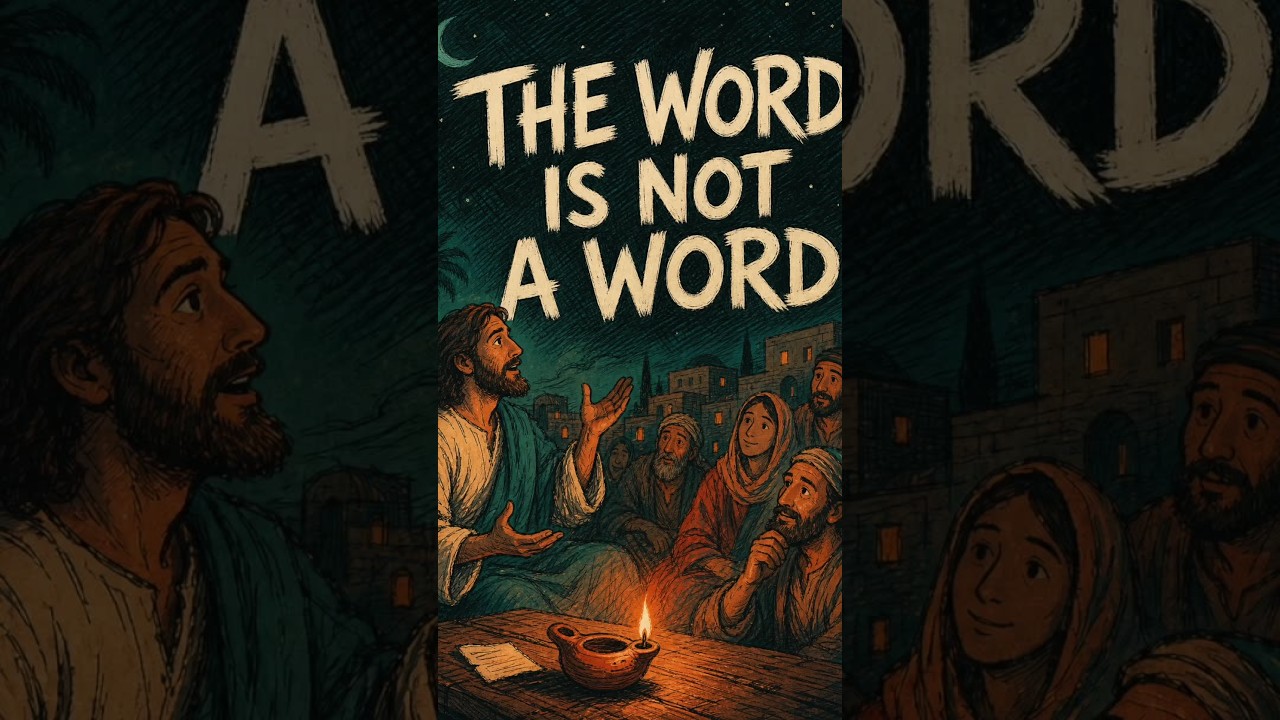
Logos begins in the concrete: a word spoken out loud. Not a thought floating in the mind, but breath shaped into meaning and sent toward another person. The Greek world, however, had stretched the word far beyond speech. Stoic philosophers used logos to name the rational principle they believed held the cosmos together, the invisible logic woven into the fabric of everything. So when John opens his Gospel with 'In the beginning was the Logos,' his Greek readers heard something enormous. He was not just saying Jesus is a good teacher. He was claiming that the organizing intelligence behind the universe had put on skin.
But the Hebrew world behind John is equally important. The Old Testament's 'word of the Lord' was never a passive thing. When God spoke, events happened. Creation came from his speech. Prophets received his word like fire in their bones. The dabar of God acted in history. John is fusing both worlds: the Greek logos that holds the cosmos together and the Hebrew dabar that commands seas to split and dry bones to live.
In practice, the New Testament uses logos for a startling range of things: a message delivered (Acts 15:27), an account given (Matthew 12:36), the gospel itself (1 Thessalonians 1:6), and the living person of Christ (John 1:1). The word pulses with agency. It does not merely describe; it accomplishes. When Hebrews 4:12 says the logos of God is living and active, that is not poetic decoration. It is a claim about what kind of thing this word actually is.
Why this word matters
I spent years reading John 1 as a beautiful prologue, poetic and a little abstract, something to quote at Christmas and move past. I treated 'the Word' like a title for Jesus the way 'CEO' is a title, descriptive but distant. What I missed was that logos was a fighting word. John was dropping it into a world full of competing claims about what holds everything together. He was saying: the answer to the cosmos is not a principle, not a philosophy, not a force. It is a person you can touch. Most of us live with a vague sense that the universe is impersonal, that meaning is something we construct rather than something we receive. Logos pushes back on that at the root. There is a Word behind the world, and he has a name.
Etymology
Logos derives from the Greek verb lego, meaning to lay, to gather, or to speak in an ordered way. That root idea of arrangement matters: logos is not noise, it is ordered utterance. Related forms include logia (sayings, oracles), analogia (proportion, analogy), and the suffix -logy found in every academic discipline, meaning systematic study. In Hebrew, the closest parallel is dabar, which also doubles as both 'word' and 'thing,' suggesting that in the ancient Semitic mind, a spoken word and the reality it creates are nearly the same.
Key Verses
Where logos appears in Scripture, and why each verse showcases it.
John 1:1ESV
In the beginning was the Word, and the Word was with God, and the Word was God.
The triple repetition of logos in one verse is deliberate and hammering. John sets the Word at creation's origin, in personal relationship with God, and identical in nature with God, all before verse two.
John 1:14ESV
And the Word became flesh and dwelt among us, and we have seen his glory, glory as of the only Son from the Father, full of grace and truth.
This is the payoff of John's prologue. The cosmic logos did not send a message; he became one, entering the material world in a body you could touch and see.
Hebrews 4:12ESV
For the word of God is living and active, sharper than any two-edged sword, piercing to the division of soul and of spirit, of joints and of marrow, and discerning the thoughts and intentions of the heart.
The author presses the active, agent-like nature of logos to its limit: it is not a text you read so much as a force that reads you.
1 John 1:1ESV
That which was from the beginning, which we have heard, which we have seen with our eyes, which we looked upon and have touched with our hands, concerning the word of life.
John circles back to logos at the start of his letter, insisting on physical contact: heard, seen, touched. The eternal Word left physical fingerprints on human history.
Revelation 19:13ESV
He is clothed in a robe dipped in blood, and the name by which he is called is The Word of God.
The risen, returning Christ still carries the name logos at the end of the story. His identity as the Word is not a phase of his ministry; it is his eternal name.
Related Words
Words in the same semantic family.
dabarrhemalogiaanalogia
1 Teaching on logos
Every video where Adam teaches on this word, in publication order.
Featured In
This word is studied in depth in the following monthly Bible studies.