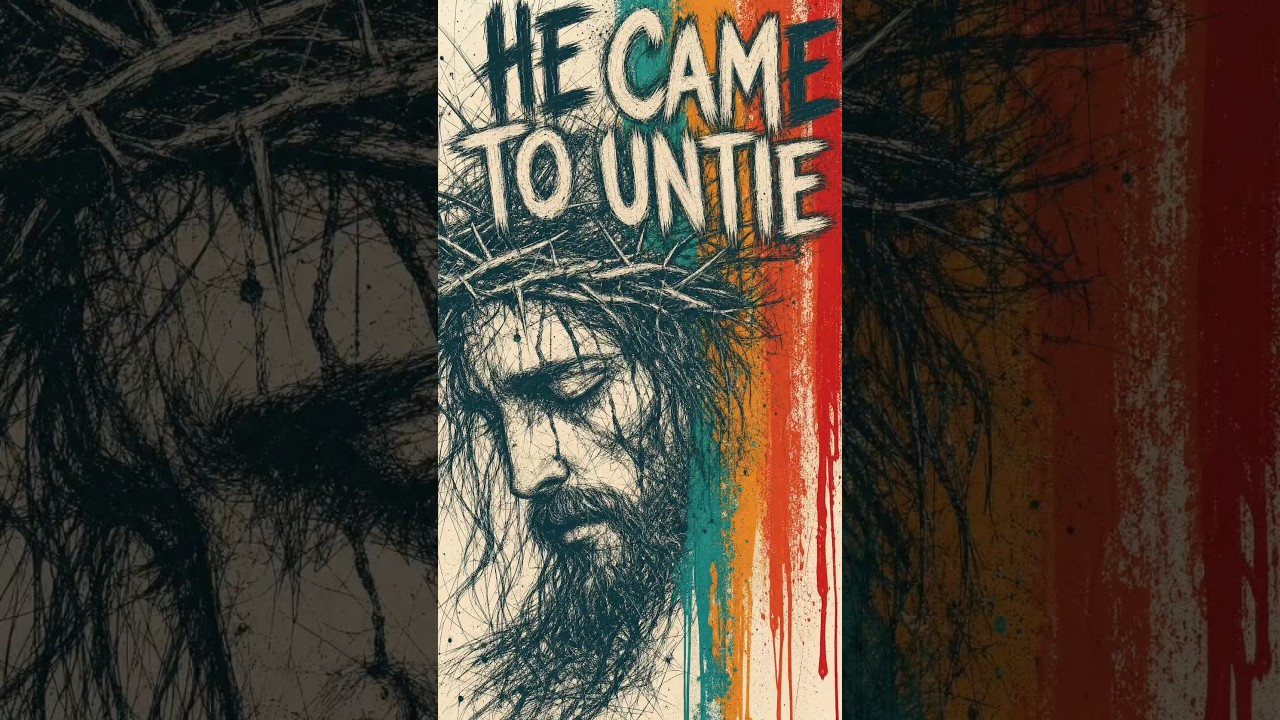
λύω
Greek word · FaithLabz word study
λύω
luo
to untie, to loose
Often translated: untielooseabolishdestroyrelease
What luo means
At its most literal, λύω means to untie a knot, to unfasten a sandal strap, to release an animal from its tether. You can picture a farmer loosening an ox from a yoke, or a servant kneeling to unbind a master's sandals. That physical image is exactly where John the Baptist stands when he says he isn't worthy to perform even that act for Jesus. The word carries the kinetic sense of something bound now being set free, something fastened now coming loose.
But Greek authors pushed λύω far beyond the physical. It came to mean dissolving a contract, annulling a law, or breaking apart an agreement. When Jesus says he came not to abolish (λύω) the Law but to fulfill it, he's using the word's legal register. He's addressing people who feared he was coming to tear up the covenant document.
In Johannine theology, λύω reaches its deepest register. The Son of God appeared to destroy (λύω) the works of the devil. Death's grip on Lazarus is addressed with the same vocabulary: 'Unbind him and let him go.' The same word that describes loosening sandal straps describes what resurrection does to death's claim on a body.
In eschatological texts, λύω describes Satan being released at the end of the age, and the heavens being dissolved by fire. Binding and loosing, restraint and release, bondage and freedom. The word holds all of it together in one taut, kinetic image.
Why this word matters
Most of us read the binding-and-loosing passages in Matthew 16 and 18 as obscure ecclesiastical procedures, something for church councils to sort out. I spent years treating them as administrative rather than cosmic. But when you trace λύω through the whole New Testament, you start to see that binding and loosing is the drama of the entire biblical story. Something is bound that should be free. Something is knotted that God intends to untie. The word shows up at a sandal strap, at the tomb of Lazarus, at the destruction of death itself, at the final release of Satan before judgment. The same hand that unties the knot of our sin is the hand that will one day dissolve the heavens and make all things new.
Etymology
λύω comes from the Proto-Indo-European root *leu-, meaning to loosen or divide. It shares ancestry with the Latin 'solvere' (to solve, to dissolve) and 'luere' (to release, to atone). Its Greek cognates include λύσις (lysis, a releasing or dissolution), λύτρον (lytron, ransom price), and λυτρόω (to redeem by paying a release price). That last connection is theologically massive. The same root that describes untying a sandal also underlies the New Testament's ransom and redemption vocabulary.
Key Verses
Where luo appears in Scripture, and why each verse showcases it.
John 1:27ESV
even he who comes after me, the strap of whose sandal I am not worthy to untie.
λύω appears here in its most physical, humble form. John uses the word to describe the lowest domestic act, and declares himself unfit even for that, setting the stage for the word's escalating significance throughout the Gospel.
Matthew 5:17ESV
Do not think that I have come to abolish the Law or the Prophets; I have not come to abolish them but to fulfill them.
Jesus uses λύω in its legal register here, the annulling of a covenant or law. His denial is pointed: he is not the one who comes to unravel what God has bound.
John 11:44ESV
The man who had died came out, his hands and feet bound with linen strips, and his face wrapped with a cloth. Jesus said to them, 'Unbind him, and let him go.'
The command to unbind Lazarus uses λύω and gives the word its most visceral image in the Gospels. Jesus speaks resurrection and then speaks release; the two acts belong together.
1 John 3:8ESV
Whoever makes a practice of sinning is of the devil, for the devil has been sinning from the beginning. The reason the Son of God appeared was to destroy the works of the devil.
λύω here is translated 'destroy,' but the word is still untie, dissolve, undo. John frames the entire incarnation as an act of loosing, God in flesh unraveling what the enemy has knotted.
Matthew 16:19ESV
I will give you the keys of the kingdom of heaven, and whatever you bind on earth shall be bound in heaven, and whatever you loose on earth shall be loosed in heaven.
λύω stands at the center of this famous promise, paired with its opposite, binding. Jesus gives his church authority expressed in the vocabulary of tying and untying, echoing rabbinic language for permitted and forbidden, but grounded now in resurrection power.
Related Words
Words in the same semantic family.
lytronlytrooapolyokatalyo
1 Teaching on luo
Every video where Adam teaches on this word, in publication order.
Featured In
This word is studied in depth in the following monthly Bible studies.