μάχαιρα
Greek word · FaithLabz word study
μάχαιρα
machaira
sword, blade
Often translated: swordbladeknifedaggerthe sword
What machaira means
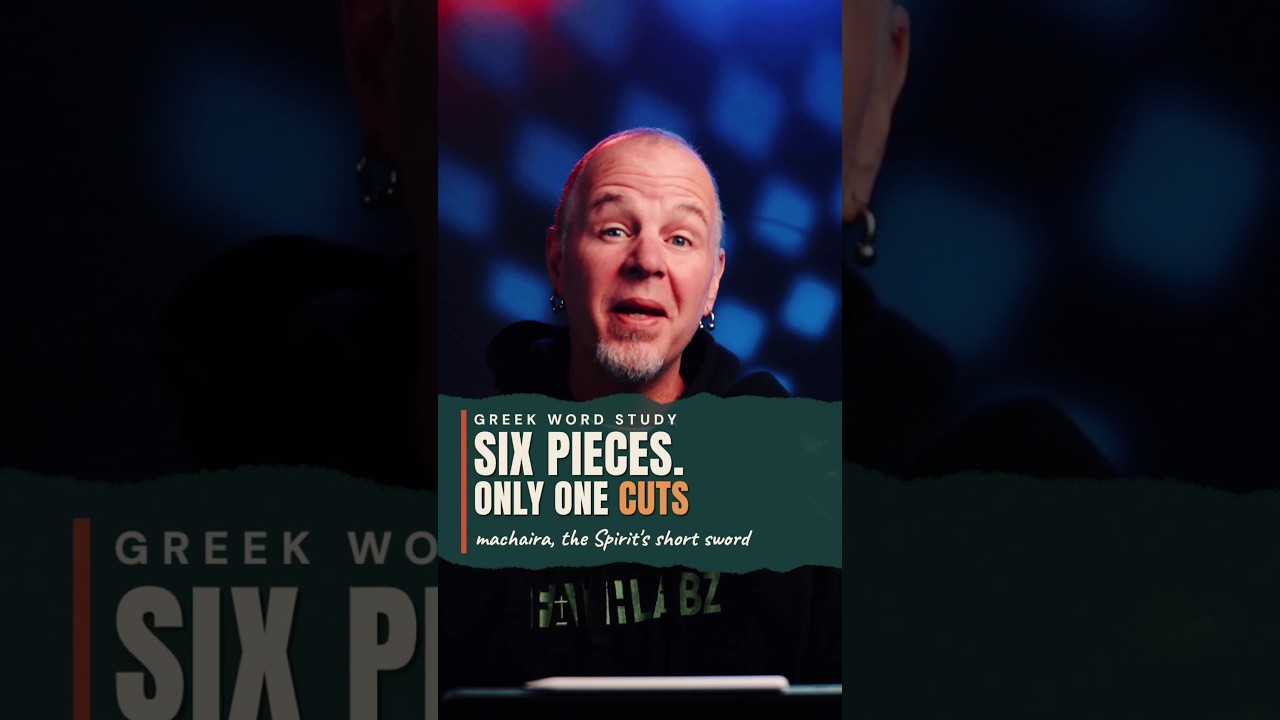
The μάχαιρα was not the long, sweeping broadsword of a cavalry charge. It was a short blade, a dagger or short sword used for close, personal work. Soldiers carried it at their side. Butchers used a version of it to cut meat. It was the blade you drew when the enemy was already in your face, when the fight had gotten intimate and unavoidable. This is the word Paul uses in Romans 8:35 when he asks whether anything can separate us from the love of Christ, listing 'sword' among the dangers. This is the word in Hebrews 4:12, where the Word of God divides soul and spirit. This is also the specific word for the sword Peter drew in the garden when he cut off Malchus's ear. Not a weapon of distance. A weapon of proximity. The biblical authors chose μάχαιρα deliberately over ῥομφαία, the long Thracian sword, because the μάχαιρα communicated something particular: close quarters, personal stakes, a cut that requires nearness. When Hebrews says God's Word is sharper than any two-edged μάχαιρα, the image is not a weapon swung from a distance at an enemy. It is a blade close enough to feel on your skin. The Word of God does not operate from a safe distance. It gets right up next to you, and it cuts.
Why this word matters
Most of us picture a grand medieval longsword when we read 'sword' in the New Testament. I did for years. That image keeps the blade at a comfortable distance, something wielded out there in battle, not pressed against your ribs. But μάχαιρα is not that sword. It is the short blade. The close one. When Hebrews 4:12 says the Word of God is sharper than any two-edged μάχαιρα, it is telling you that Scripture does not read you from across the room. It moves in. It finds the seam between what you perform and what you actually believe. That kind of reading of God's Word is not comfortable. It is not supposed to be. The blade is already near.
Etymology
The word derives from the Greek root mach-, related to μάχη (mache), meaning 'battle' or 'fight.' That same root feeds into words like μάχομαι (machomai), 'to fight' or 'to quarrel.' The -aira suffix marks it as the instrument of that fighting. The semantic family covers conflict at close range, not strategic warfare but hand-to-hand engagement. Related Hebrew equivalents include chereb and pethach, though μάχαιρα carries a more specific sense of a shorter, personal blade.
Key Verses
Where machaira appears in Scripture, and why each verse showcases it.
Hebrews 4:12ESV
For the word of God is living and active, sharper than any two-edged sword, piercing to the division of soul and of spirit, of joints and of marrow, and discerning the thoughts and intentions of the heart.
The word for sword here is μάχαιρα, the short personal blade. The precision of the image matters: this is not a weapon of distance but of surgical closeness, cutting between things almost indistinguishable from one another.
Romans 8:35ESV
Who shall separate us from the love of Christ? Shall tribulation, or distress, or persecution, or famine, or nakedness, or danger, or sword?
Paul lists μάχαιρα as a real, physical threat the early church faced. The word is not metaphor here; it names the executioner's blade, the cost some paid for their confession.
Matthew 26:51ESV
And behold, one of those who were with Jesus stretched out his hand and drew his sword and struck the servant of the high priest and cut off his ear.
John 18:10 names this man as Peter. The μάχαιρα he drew was a personal sidearm, not a military weapon, which reveals something about how ordinary men in first-century Judea armed themselves.
Luke 21:24ESV
They will fall by the edge of the sword and be led captive among all nations, and Jerusalem will be trampled underfoot by the Gentiles, until the times of the Gentiles are fulfilled.
Jesus uses μάχαιρα in his prophetic lament over Jerusalem, grounding the coming judgment in the visceral reality of close-range violence, not abstract military defeat.
Romans 13:4ESV
For he is God's servant for your good. But if you do wrong, be afraid, for he does not bear the sword in vain. For he is the servant of God, an avenger who carries out God's wrath on the wrongdoer.
Paul uses μάχαιρα to describe governing authority's power to punish. The short blade here stands in for judicial force, the state's capacity to enact real consequence on real bodies.
Related Words
Words in the same semantic family.
rhomphaiamachemachomaixiphos
1 Teaching on machaira
Every video where Adam teaches on this word, in publication order.
Featured In
This word is studied in depth in the following monthly Bible studies.