Matthew 3:2ESV
Repent, for the kingdom of heaven is at hand.
John's single-word command, metanoeite, is the verbal form of metanoia. The urgency is spatial: something is near, and your current direction will take you away from it.
change of mind, turning around
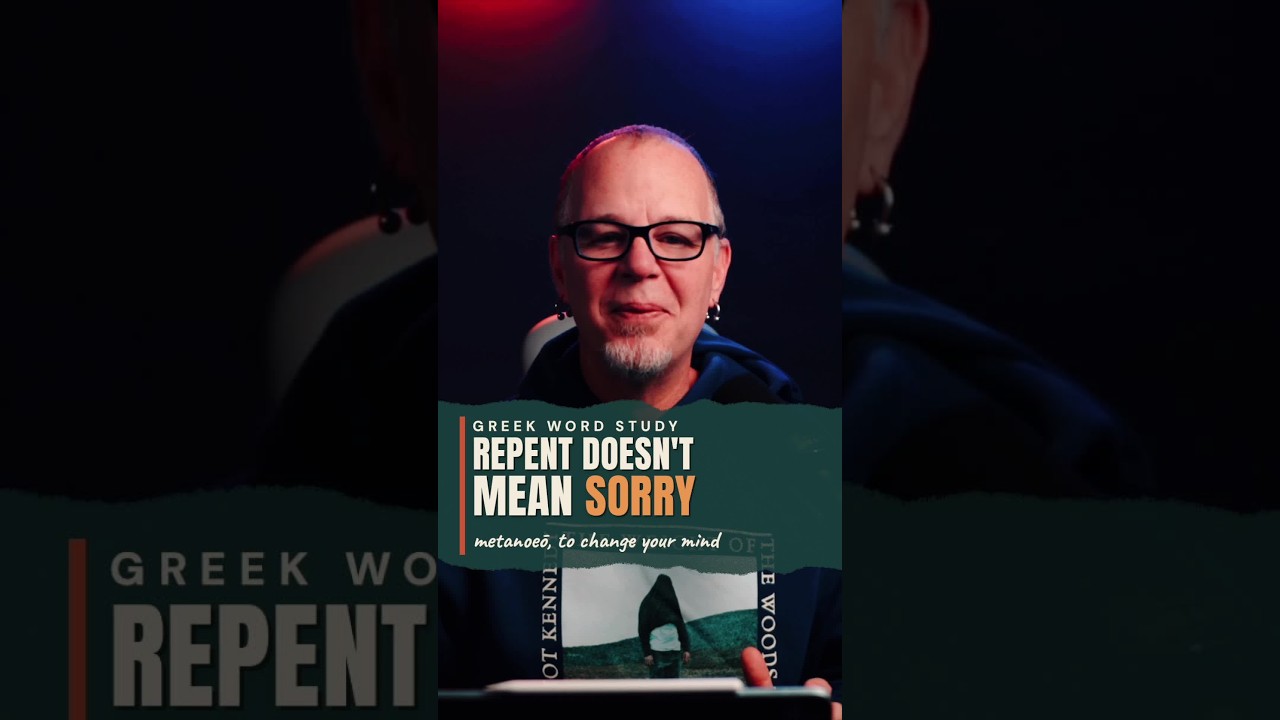
Metanoia is built from two Greek words: meta, meaning 'after' or 'beyond,' and nous, meaning 'mind.' The literal core is 'afterthought' or 'a thinking beyond what you previously thought.' But the biblical writers pressed this word into service for something far more physical and directional than an intellectual revision. In the Septuagint and the New Testament, metanoia describes a complete reversal of orientation. Not a tweak. A turn. You were walking one direction and now you walk another. John the Baptist stood in the wilderness and demanded it. Jesus opened his public ministry with it. Peter's first sermon ended with it as the call. The word carries the assumption that your former direction was wrong, that something has interrupted your movement, and that you have pivoted toward God. The emotional register matters here too. The Greek world used metanoia and its verb form metanoeo to describe genuine grief over a past course of action, not shallow regret but the kind of sorrow that produces motion. In the New Testament, this inward grief and outward turn are inseparable. James distinguishes between worldly sorrow, which produces death, and godly sorrow, which produces metanoia leading to salvation. So the word refuses to let you separate feeling from action, or action from direction. A changed mind that never moves your feet isn't metanoia. A change of behavior with no transformed thinking isn't metanoia. The biblical authors held both together and called the whole thing repentance.
Most of us heard 'repent' so many times that we stopped hearing it. I did. I reduced it to feeling bad about something I did, maybe confessing it, and then moving on. The word became a kind of spiritual housekeeping. But metanoia isn't cleaning up after yourself. It's a change in the direction of your entire mind and life. The nous, the reasoning center, the thing that makes decisions and assigns value, gets turned. You don't just feel differently about one sin. You start thinking differently about what you want, what you trust, what you're walking toward. That's why Jesus led with it. It isn't the fine print of the gospel. It's the door.
From the prefix meta, indicating movement beyond or change of state, and nous, the Greek word for mind, understanding, or moral reasoning. The verb form is metanoeo. The noun metamelomai shares the 'meta' prefix but leans toward regret or remorse without necessarily implying redirection. Paul explicitly separates godly metanoia from mere metamelomai in 2 Corinthians 7:10. The semantic family touches epistrophe, meaning 'turning back' or 'conversion,' which often pairs with metanoia in Acts to describe the full arc of coming to God.
Where metanoia appears in Scripture, and why each verse showcases it.
Repent, for the kingdom of heaven is at hand.
John's single-word command, metanoeite, is the verbal form of metanoia. The urgency is spatial: something is near, and your current direction will take you away from it.
From that time Jesus began to preach, saying, 'Repent, for the kingdom of heaven is at hand.'
Jesus opens his public ministry with the same word John used, signaling that metanoia isn't a preparatory step before real discipleship begins but the defining posture of life in the kingdom.
And Peter said to them, 'Repent and be baptized every one of you in the name of Jesus Christ for the forgiveness of your sins, and you will receive the gift of the Holy Spirit.'
Peter's first post-Pentecost call pairs metanoia with baptism, showing that the inward turn expects an outward, embodied sign. The mind that has turned will use its body differently.
For godly grief produces a repentance that leads to salvation without regret, whereas worldly grief produces death.
Paul distinguishes genuine metanoia from hollow remorse by its destination. Godly sorrow moves; worldly sorrow only aches. The verse locates metanoia in a chain that ends in salvation.
Just so, I tell you, there will be more joy in heaven over one sinner who repents than over ninety-nine righteous persons who need no repentance.
Jesus attaches cosmic joy to a single act of metanoia. Heaven reacts not to moral improvement but to direction change, which reframes what repentance is actually for.
Words in the same semantic family.
Every video where Adam teaches on this word, in publication order.