μωρία
Greek word · FaithLabz word study
μωρία
moria
foolishness, absurdity
Often translated: foolishnessfollyabsurditynonsensestupidity
What moria means
μωρία (mōria) names the quality of being foolish, but the Greek word carries a sharper edge than the English 'foolishness' suggests. Its root points to something dull, flat, tasteless. Think of unsalted food that has lost its savor. From there, the word migrates into the realm of the mind and becomes a verdict: this thing is worthless, beneath serious consideration, not worth the energy of a real argument.
In Greco-Roman culture, mōria was a social and rhetorical category. A philosopher would dismiss a rival's position as mōria to end the conversation before it started. It wasn't merely 'I disagree.' It was 'this doesn't deserve my engagement.' Educated audiences in Corinth would have heard Paul invoke this word and understood exactly what weight it carried.
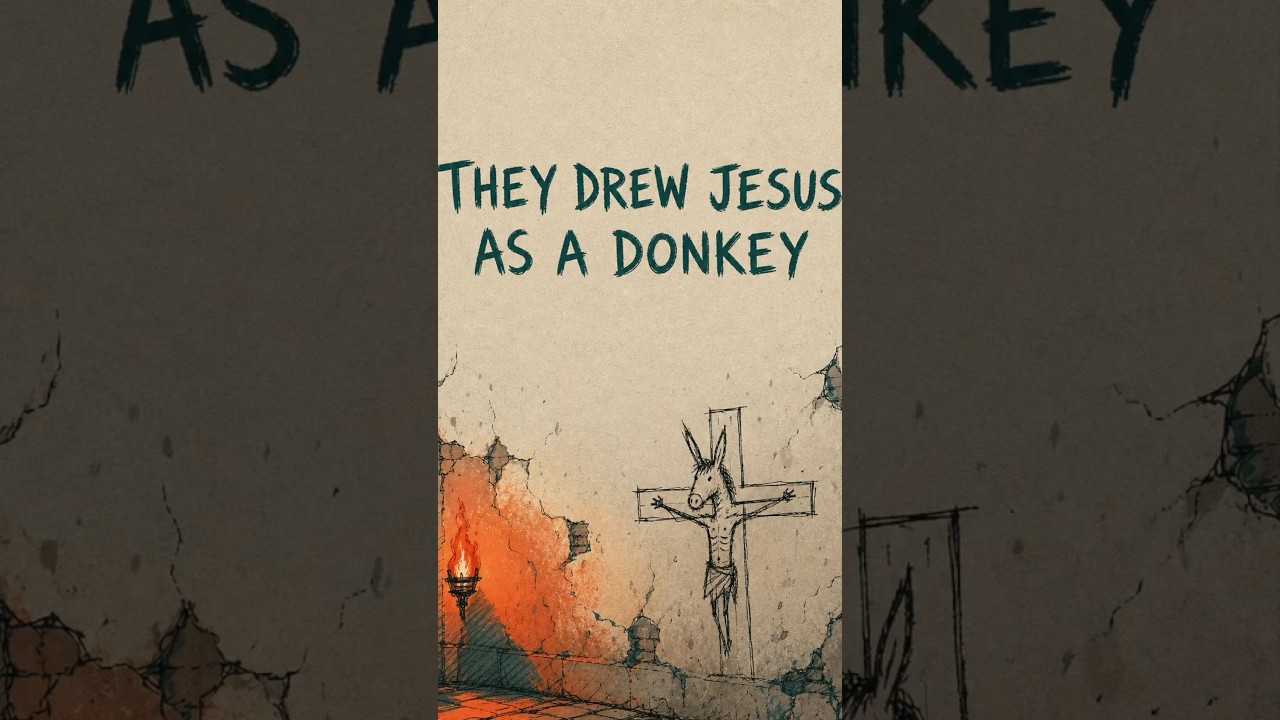
What makes Paul's use in 1 Corinthians so striking is that he turns the word on itself. He does not defend the gospel against the charge of mōria by cleaning it up or making it philosophically respectable. He agrees that it looks like mōria to those who are perishing, and then he plants his flag right there. The cross, by every metric the ancient world used to measure wisdom and power, is an embarrassment. A crucified God is a contradiction in terms. Paul does not soften that. He announces it as the exact place where God chose to work.
So mōria in Paul's hands becomes a kind of diagnostic. How you respond to what looks like foolishness tells you something about where you stand before God.
Why this word matters
Most of us read the word 'foolishness' in 1 Corinthians and assume Paul means something gentle, like a misunderstanding. I read it that way for years. I thought he was saying the gospel just looks a little strange to outsiders, the way any deep truth looks strange at first.
But mōria isn't a polite shrug. It's the word you use when you want to dismiss something as unworthy of a serious person's time. Paul's opponents weren't confused about the gospel. They were contemptuous of it.
And Paul's answer isn't to make the gospel more palatable. His answer is to say: yes, and God is still in it. The place the world calls worthless is exactly where God planted his power. That is either the most important thing you'll ever hear, or it's mōria.
Etymology
μωρία derives from the adjective μωρός (mōros), meaning dull, sluggish, or tasteless. That adjective shares a root with the Latin morus and likely connects to a Proto-Indo-European root suggesting slowness or dullness of perception. In the New Testament, μωρός appears in Matthew 5:22, where Jesus warns against calling a brother 'fool,' and in the parable of the ten virgins, where five are called 'foolish' (Matthew 25:2). The noun μωρία is almost exclusively a Pauline word, concentrated in 1 Corinthians 1 to 3.
Key Verses
Where moria appears in Scripture, and why each verse showcases it.
1 Corinthians 1:18ESV
For the word of the cross is folly to those who are perishing, but to us who are being saved it is the power of God.
Paul uses mōria here to name how the preaching of the cross registers to those outside saving faith. The word isn't a description of the gospel's quality; it's a description of the perishing person's perception.
1 Corinthians 1:21ESV
For since, in the wisdom of God, the world did not know God through wisdom, it pleased God through the folly of what we preach to save those who believe.
This verse shows Paul's argument at its sharpest: God deliberately chose the thing the world calls mōria as his instrument of salvation. The apparent absurdity is not accidental.
1 Corinthians 1:23ESV
but we preach Christ crucified, a stumbling block to Jews and folly to Gentiles,
Paul assigns mōria specifically to the Gentile response, distinguishing it from the Jewish category of skandalon. Each audience brings its own framework for dismissal, and the cross offends both.
1 Corinthians 2:14ESV
The natural person does not accept the things of the Spirit of God, for they are folly to him, and he is not able to understand them because they are spiritually discerned.
Here mōria surfaces again as a spiritual diagnostic. The unspiritual person does not merely disagree with God's wisdom; the person finds it fundamentally unacceptable, beneath serious thought.
1 Corinthians 3:19ESV
For the wisdom of this world is folly with God. For it is written, 'He catches the wise in their craftiness,'
Paul inverts the charge completely: what the world calls wisdom is mōria before God. The word now judges the judge, and the Corinthian boasting in human teachers collapses under that reversal.
Related Words
Words in the same semantic family.
1 Teaching on moria
Every video where Adam teaches on this word, in publication order.
Featured In
This word is studied in depth in the following monthly Bible studies.